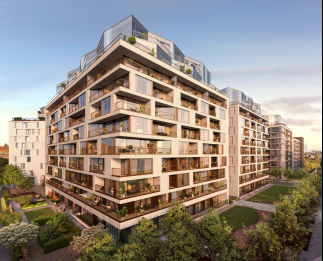
“generational living” project in Rosenheim, south-east of Munich.

Multi-generational German housing project starts on site

Essen-headquartered Instone Real Estate has started development of a “generational living” project in Rosenheim, south-east of Munich. The scheme, which is being jointly undertaken with company BayernCare is located in the city’s mixed-use Lokhöfe district and will accommodate seniors and students alongside each other.

The project comprises 142 student apartments which Instone will develop, 44 apartments for the elderly and a care facility for a total of 81 residents. The senior housing component will be developed by BayernCare.

BayernCare managing director Günther Marzog said that the combination of senior citizen and student housing is groundbreaking. “Integration into urban structures is particularly important for seniors. Here you are in the middle of life, in the immediate vicinity of young people and close to shopping and meeting places,” he said.

The project comprises two adjacent seven-storey, L-shaped buildings, separately housing senior citizens and students. The buildings are designed to create a sheltered inner living area with a green inner courtyard where the different generations can relax and meet.

The student apartments, all now sold, will range in size from 19 to 36 sq m and there are 12 different apartment types. An underground parking area will provide car spaces and cycle storage.

BayernCare has pre-let the care facility to the Charleston Group, which will also provide a range of care and domestic services for the retirement home residents.

S&P Commercial Development is developing Lokhöfe district’s commercial areas which will comprise 10,600 sq m of office space and 2,200 sq m of retail space in addition to residential buildings. The district will also include a 145-room Premier Inn hotel and a 250-space multi-storey car park. The new city quarter will be completed in 2023.

Author: Paul Strohm

Source: Real Asset Insight

Riverstone Kensington

Cheyne lends £219 in record UK over-65s housing debt deal

Cheyne Capital is lending £219 million to Riverstone, which provides residential property in premium London locations for people of over 65 years.

The senior finance facility will be used for a development in Kensington and represents the UK’s largest single asset debt deal for the later living sector, according to Cheyne.

Riverstone Kensington is at Royal Warwick Square and will comprise 190 one, two and three-bedroom apartments and will welcome its first residents this year. Announced in July 2019, it is being developed by St Edward.

The financing follows a year after Cheyne provided Riverstone with a £99 million facility for its Fulham Riverside residence, which is due to open in the second half of 2022. Riverstone Fulham will have 161 one, two and three-bedroom apartments and was acquired in 2018 from Barratt London and London & Quadrant. Riverstone’s residences include amenities such as a spa, pool, restaurant, cinema and concierge services as well as on-site professional care, when it is needed.

“The model, which has seen great success internationally, is set to experience further demand over the coming years in the UK as its over 65s population continues to grow. Riverstone’s proposition is ideally placed to meet increasing demand,” said Simon Loveridge, Riverstone’s chief financial officer.

Earlier this month Riverstone announced the acquisition of its third residence, on Bishops Avenue, near Hampstead Heath in north west London. The company acquired a 2.5-acre site and will build a 230,000 sq ft project with an all-electric energy strategy targeting a net zero carbon plan.

Author: Paul Strohm

Source: Real Asset Insight

Care home in Riverstick, South West Ireland

Belgian Aedifica buys €126m Ireland, Jersey, IOM care homes

Brussels-listed healthcare property company Aedifica has invested €126 million in two portfolios, one comprising five homes in Jersey and the Isle of Man, the other consists of three homes in Ireland. The deals will increase Aedifica’s capacity by a total of more than 600 residents.

Aedifica has paid £46 million for the four homes on Jersey and one on the Isle of Man, operated by LV Care Group, part of Emera Group. The price represented a yield of about 6%.

The portfolio comprises two modern, purpose-built care homes, two converted hotels and a long standing care campus. Three of the assets will be extended and reworked at a cost of about £12 million to provide additional bedrooms and communal living areas and will be completed in 2023 when they will have a total of 283 en-suite bedrooms for seniors requiring continuous care.

“This transaction will further strengthen our position and visibility in the British market, increasing our portfolio in the United Kingdom, including Crown Dependencies Jersey and Isle of Man, to over €1 billion upon completion of all development projects,” Aedifica UK country manager Bruce Walker said.

The company also acquired an apartment building and a development plot adjacent to the St. Joseph’s care home for about £9 million but says these non-strategic assets will be sold within the coming 12 months.

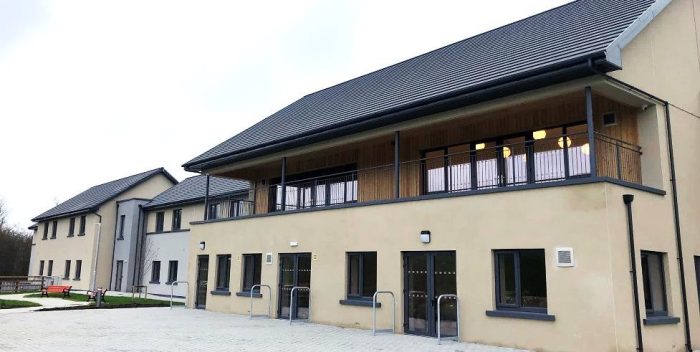
The portfolio in Ireland entails a total investment of about €57 million. The three care homes were completed during the first quarter of 2022 in Dundalk and Duleek in North East Ireland and in Riverstick, South West Ireland (pictured).

The care homes accommodate a total of up to 346 elderly people requiring continuous care. The deal increases the company’s portfolio in Ireland to nearly €270 million.

The Irish properties will be operated by Silver Stream Healthcare.

Author: Paul Strohm

Source: Real Asset Insight

Frédéric Dib, President and Managing Partner of Mozaïc AM

MoZaïC Asset Management & the SHHA are introducing the governance code

MoZaïC Asset Management & the SHHA have launched a collective initiative to restore confidence in the nursing home sector.


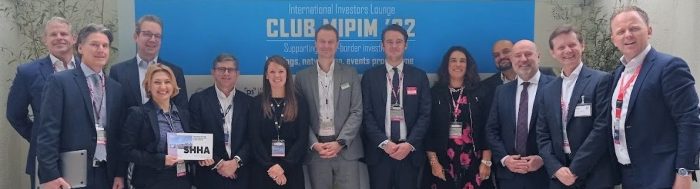
MoZaïC AM introduced an initiative, under the umbrella of the Senior Housing & Healthcare Association (SHHA), to restore trust in the sector which was shaken by the Orpéa crisis in France. Details were presented during the SHHA briefing at MIPIM. “There is an urgent need to tackle any misconceptions about the sector and represent the state of play of Governance within the top operators in the major European markets, ” – said Frédéric Dib, CEO of MoZaïC AM.


Recent publications and documentaries have cast a shadow on the market of nursing homes in France as some have pointed that there could have been a systemic drive from the operator’s management that may have led to the shortfalls identified.


The SHHA has the conviction that many operators in the sector have made tremendous efforts over the last few years to raise their Corporate and Social Responsibility standards. However, such events raise concerns among investors for the sector, in particular around the reputational risk that could be associated with their investment in nursing home operators or real estate, but have little tools to assess, analyze and/or compare.

This is why MoZaïC AM and the SHHA invites willing operators to respond to a questionnaire, whose aim would be to confirm/establish/validate to which extent checks and balances have been put in place within each respondent’s organization to ensure that the well-being of the residents, their families and staff members are at the heart of the operators’ core processes; And that systems are in place to ascertain that in case of any serious adverse event occurring, it will be known, addressed and resolved in a timely and adequate manner.


The objective is to present the state of play of the quality of governance within the top European operators. Each operator will be able to compare its score with the benchmark, and each investor will be able to ascertain, for each of the KPI identified, what is the benchmark of the nursing home sector.
A reflection will be initiated by members of the SHHA as to whether this initiative should be complement by the setting up of a label that could be established with the help of certification agencies.

The objective of the initiative is to provide a response to a questioning that has shaken confidence in the sector and has raised questions from multiple directions (Regulators/ Personnel/ Users and their families/ General public/ Investors in Real Estate and Operations).

MoZaïC will provide the necessary operational and analytical support for this initiative. An ethical commission will be established by the SHHA to ensure an independent approach. The questionnaire is to be developed in the coming weeks, so that the report on the state of play of governance within the European nursing home operators shall be published by the end of the year.

SHHA panel at MIPIM'2022

Senior housing and healthcare sector ticks all three ESG boxes

There are two sectors that tick all three ESG boxes for their positive impact on the environment, society and governance, experts agreed at Real Asset Media’s Senior Housing & Healthcare Investment briefing, which took place recently at MIPIM in Cannes.

Stephen Miles, Executive Director – Head of Operational Real Estate Investment, Continental Europe, CBRE
“Until now capital has focused on the E, the greening and energy efficiency of buildings, but now it’s looking at the social aspect like in the US,” said Stephen Miles, executive director – head of operational real estate investment, continental Europe, CBRE. “It’s all coming together, because people realise that you have to have the complete package.”

In the healthcare sector it has often been the other way round, with social impact coming first and the sustainability angle being looked at later.

“Healthcare is very focused on the S, the social impact is clear,” said Dietmar Zischg, partner, CMS Adonnino Ascoli & Cavasola Scamoni. “We assist investors in setting up dedicated healthcare funds, but then usually work is needed on the E because existing stock is not compliant. But they find that capex improvements drive down service charges, so it’s a positive.”

A well thought-out ESG strategy is now an absolute must and this trend is being driven by investors and lenders more than regulators. Regulations also vary in different European countries so companies have to adapt and be pro-active.

“Sometimes we have to anticipate regulations, because we can’t wait,” said Raoul Thomassen, chief operational officer, Aedifica. “But future-proofing our portfolio is crucial to us, because we are building for the next thirty years.”

European senior housing and healthcare are becoming less alternative and more mainstream as they attract more institutional capital that is keen to diversify.

“Many pension funds and insurance companies will try to widen their footprint in the sector and many operators will try to develop a platform,” said Cushman & Wakefield capital markets partner Jan-Bastian Knod, head of residential and healthcare advisory. “French operators now cover all European countries, which makes it interesting for institutional capital looking for core product, because it’s a guarantee of quality.”

As institutional capital comes in, developers will see the opportunity and bring more product to the market.

“We focus on Germany and France but we want diversification so we are looking at Spain and Italy, where we see potential because of the shift from family care to professional care in specialised facilities”, said Nikolai Schmidt, managing director – transaction health care, Swiss Life Asset Managers.

Investors are increasingly crossing borders

Germany and France are the biggest markets in Continental Europe, where investors can find the best opportunities of portfolio deals, but investors are increasingly casting their net wider.

“Operators are beginning to cross borders and bring their expertise to countries like Spain and Italy,” said Caryn Donahue, head of senior housing transactions, Savills. “I see more consolidation happening in the market.”

Caryn Donahue, Head of Senior Housing Transactions, Savills
There is a lot of choice for investors, as these asset classes have many sub-sectors they can choose to focus on.

“There is no lack of demand from investors, but capital feels most comfortable with independent living,” said Miles. “There is huge scope for institutional capital to come in and expand that part of the market, providing the right types of accommodation so people can live independent lives for longer.”

Hybrid schemes, which provide a combination of independent and assisted living, are also becoming more popular in some European countries.

“There’s a shift underway from nursing homes to assisted living, because it’s less regulation-intense and it needs less staff,” said Schmidt. “It is very difficult to find qualified staff to work in nursing homes.”

Looking at the US market, which is more mature, gives an idea of the next steps that need to be taken in Europe.

“In the US the sector is much better understood by investors, while Europe still has a long way to go,” said Donahue. “In the US, for example, there are clear definitions for the many sub-sectors, while in Europe it’s difficult for entrants to know what is being talked about.”

Terminology is a real issue that can deter new entrants and confuse existing players.

“If you want to attract institutional capital to the market you have to make it easier for them and naming conventions would be an important first step,” said Miles.

Author: Nicol Dynes

Source: Real Asset Insight

Care homes in North West England

New Care funding follows Octopus’ net zero pledge

Octopus Real Estate is financing the development of five “future-proof” care homes, valued at around £80m which will be operated by the New Care group on completion.

The homes, located in North West England, will provide a total of 347 bedrooms which will all have en-suite wet room facilities.

Knight Frank advised New Care on the funding partnership. Julian Evans, head of healthcare at Knight Frank, said: “The New Care brand and state of the art care settings are on point for ESG and welcomed by both operator and funding institutions. Supply chains are decelerating care home development and we are likely to experience a shortfall of new bed provision over the next 24 months.”

The Fund’s standard development funding terms now also include requirements relating to environmental, social and corporate governance.

This week, Octopus Real Estate, announced its commitment to building new care home developments that are net zero by 2030, which it says marks the first such pledge across the care home industry.

In addition to funding new developments to achieve carbon neutrality by 2030, Octopus will make significant investments into its existing portfolio of 71 care homes across the UK to retrofit these properties. It has committed to making these care homes and 13 properties currently under construction net zero by 2040.

Octopus said that its two net zero commitments were met with “unbridled support” from the institutional investors who invest in Octopus’ care homes strategy, “demonstrating the demand among pension funds, insurers, sovereign wealth funds and family offices for assets that are contributing to the UK’s energy transition requirements.”

As part of its commitments, where needed, Octopus will work to minimise and offset the embodied carbon in the construction process of its new developments, including through UK Government-approved, high-quality certified carbon sequestration projects.

“Our commitments place us ahead of both the UK Government’s net zero targets and the Paris Agreement targets,” said Michael Toft, care home senior fund manager, Octopus Real Estate. “Octopus Real Estate’s investors overwhelmingly supported these pledges, mirroring their overarching support for our care home strategy, which helps them to achieve genuine impact for society while generating financial returns.”

Author: Paul Strohm

Source: Real Asset Insight

SHHA session at MIPIM 2022

MIPIM: Senior Housing market more competitive post-Covid

A lot of new capital is seeking to enter the senior accommodation market in Europe but established players have an advantage, delegates heard at Real Asset Media’s Senior Housing & Healthcare Investment briefing, which took place live at MIPIM in Cannes yesterday.

“The market has become very competitive because of new investors that have entered the market during the pandemic”, said Nikolai Schmidt.

“The market has become very competitive because of new investors that have entered the market during the pandemic”, said Nikolai Schmidt, Managing Director – Transaction Health Care, Swiss Life Asset Managers. “We were pioneers, investing €2 billion in senior homes and assisted living since 2006, but we’re still expanding. It’s a strong market and we like the focus on the social aspect”.

The Covid pandemic has acted as an accelerator, focusing investors’ attention on the importance of the sector and on the opportunities it offers.

“More investors are moving out of offices or resi and trying to get into the healthcare market because they like the long leases and resilient assets”, said Jan-Bastian Knod, Partner, Head of Residential Advisory, Head of Healthcare Advisory, Capital Markets, Cushman & Wakefield. “We see a significant increase in interest and demand and more competition”.

New players tend to target the bigger, established and liquid markets like Germany and France where it is possible to find portfolio deals, while established players are seeking geographical diversification.

“We are pan-European, have €5 billion of assets in 8 countries and are growing our portfolio”, said Raoul Thomassen, Chief Operational Officer, Aedifica. “We have a €800 million pipeline and are ready to enter new markets provided we can buy a portfolio and not just a couple of assets. We’ve just entered Ireland because we see the opportunity to build scale”.

“We have €5 billion of assets in 8 countries and are growing”, said Raoul Thomassen.

One crucial factor for institutional investors is stability in the country, as they are making long-term commitments and don’t want to have to deal with sudden policy changes. The other is the presence of reliable operators with a good track record.

“France and Germany are the biggest markets, but all countries are under-supplied, so you can find opportunities everywhere provided you have the right product and the right operator”, said Stephen Miles, Executive Director – Head of Operational Real Estate Investment, Continental Europe, CBRE. “Once you have a footprint you can use that expertise to expand”.

Market players with an established footprint have the advantage of expertise and are better placed to find the best operators.

“In Europe, unlike in the US, there aren’t many institutionalised operators, which is a challenge for the sector”, said Caryn Donahue, Head of Senior Housing Transacions, Savills. “That’s the biggest barrier across the Continent”.

Spain and Italy are interesting markets because of the demographics and the shift from family care to professional care in facilities, but there are challenges.

“Southern Europe is lagging behind”, said Dietmar Zischg, partner, CMS Adonnino Ascoli & Cavasola Scamoni. “It’s easier to find product, but it may not be what you’re looking for. You have to choose your operator carefully and do your due diligence because it’s very difficult for the owner to change operator”.

Author: Nicol Dynes

Source: Real Asset Insight

Savills report: Senior living in UK: Integrated Retirement Communities

Spotlight: UK Senior Living


According to the Savills report published in February 2022, over the past decade, Integrated Retirement Communities have become the UK’s predominant form of senior living provision, still the delivery remains low.

Often referred to previously as ‘housing with care’, the new term ‘Integrated Retirement Community‘ (IRC) coined by ARCO (Associated Retirement Community Operators), the body representing the sector, seeks to better define the senior living offering which sits between retirement housing (age-restricted but with limited amenity or care: often referred to previously as ‘sheltered housing’) and care homes.

The delivery of new senior living homes in the UK is a story in three parts. Between 1970 and 1990, the UK saw an acceleration in delivery, from around 7,500 completions per year to 20,000. This was largely down to local authorities, who developed and operated stock, much of which is now out of date and unattractive to the current generation of retirees.

Between the early 1990s and the global financial crisis (GFC) in 2007/08, only around 5,000 new retirement homes were completed, the vast bulk of which was retirement housing, with little care provision.

Since the post-GFC low, delivery has marginally increased – albeit from a small base. What has been delivered in this period has largely been IRCs with communal spaces and care facilities, in order for occupants to ‘age in place’. Over the past decade around 4,000 IRCs have been delivered annually, which amounts to a little over half of the stock delivered each year.

The UK is about 20 years behind the US market in terms of IRCS

Whilst IRCs have been around for a while in the UK, it is only more recently that they have started to capture the attention of the public and of investors. As a result, other markets such as the USA and Australia are around 20 years ahead of the UK in terms of development of this sector.

The US passed an inflection point in 2013, where the total number of seniors housing (independent living, assisted living and dementia care) units passed the number of nursing home units.

The former has then continued to accelerate, whereas the latter has seen little growth over the past two decades.

Now, the UK market is starting to see a boom in the delivery of IRCs. Compared to the US market, the UK has a long way to go to catch up, but there are signs that we may be at the beginning of a similar inflection point.

The UK has scope for considerable growth as it currently lags behind other markets

The UK’s penetration rate, measured by the number of IRCs as a proportion of over 65s, is far below that of other western countries. Just 1.0% of those in the UK aged over 65 live in IRCs (otherwise known as ‘housing with care’), compared to 6.5% in the USA and 5.5% in the US and Australia, respectively.

This does, however, mean that the UK has considerable scope for growth. If the UK’s provision rate were to reach 5%, a little less than the US and Australian markets, the IRC sector would grow to around 415,000 homes. That equates to an extra 325,000 homes and around £125bn in value.

The opportunity will grow further as the UK’s population continues to age

By 2030, the number of over 65s in the UK is projected to total over 15 million, which is 2.4 million more than today. Put another way, in ten years’ time, the population of over 65s will be increasing by 300,000 people every year.

If the IRC sector continues to add around 4,000 homes each year, as it currently does, the provision rate would only increase from 1.0% today, to 1.3% by 2030, underscoring the need and potential for significant continued growth in the sector.

Buyers of senior living homes are willing to pay more and move further

Savills examined the 40 largest senior living schemes (a mixture of IRCs and retirement housing) to complete in the UK between 2016 and 2020, all with c.100 homes or more and with over 6,000 homes in the total sample.

Its analysis revealed that the average purchaser of a home in a new build senior living scheme is prepared to move 76% (3.8 miles) further than the average residential new build buyer.

Homes in IRCs commanded a premium of 17% over their wider local new build market. Retirement housing (age restricted but with minimal amenity or care facilities) commanded a smaller premium, of 4% above their wider local new build market.

The vast majority (64%) of movers into senior living homes were downsizers. The proportion of people moving into larger properties or a property of a similar size (less than 10% larger or smaller) was the same, at 18% each.

Movers into IRCs also move from larger properties than those moving into retirement housing, with households who move into IRCs moving into homes that are 22% smaller on average than their previous home.

To learn more see: Savills full report: Spotlight: UK Senior Living

Image: George Arthur Pflueger/Unsplash]

Nordic NREP pays €200m for senior care home portfolio

Nordic property investor NREP has paid about €200 million for a portfolio of 13 elderly care homes in Sweden.

The facilities have been bought on behalf of the NREP Income+ fund and were acquired from Swedish property developer and manager Fastighets AB Stenvalvet.

[Image: George Arthur Pflueger/Unsplash]
NREP said the portfolio increases its care home platform Altura’s assets under management to over €1 billion and “raises its exposure to demographically-driven projects that make a tangible difference to society.”

The care homes are spread across ten different municipalities, and provide about 500 senior living apartments leased to a range of public and private operators. The portfolio is fully operational and leased, with less than 1% vacancy.

NREP said it has identified opportunities to enhance the quality and value of the homes through a number of sustainability initiatives that will reduce the properties’ climate footprint. An asset management programme is planned that includes refurbishments and extensions.

Jani Nokkanen.
“We remain unwaveringly consistent in our customer-centric approach to investment, and consider the care sector to present a particularly attractive opportunity to deliver solutions to a clear societal problem,” said NREP CIO Jani Nokkanen.

The share of the Nordic population over 80 years of age is forecast to grow by 50% over the next ten years.

The NREP Income+ fund is an open-ended core-plus fund aimed at long-term investments into modern logistics facilities, middle-income residential, offices as well as care homes.

NREP was advised on this transaction by Real Advokatbyrå, Svalner, Niras and RED Management.

Author: Paul Strohm

Source: Real Asset Insight

Care Property Invest acquires new assets in Belgium

Care Property Invest announces the acquisition of the residential care complex ‘Dungelhoeff’ in Lier. This transaction was realised by means of a successful capital increase via a contribution in kind. The new building project, which was completed just a few days ago, consists of a residential care centre with 128 residential places, including a rehabilitation stay centre with 7 places, and a group of 30 assisted living apartments. The project is operated by Vulpia Care Group on the basis of a new long-term leasehold agreement of the ‘triple net’ type with a minimum duration of 27 years (renewable and annually index able).

Peter Van Heukelom, CEO of Care Property Invest: ‘With the acquisition of the Dungelhoeff project, we are continuing the geographical expansion of our Flemish healthcare real estate portfolio. Including this investment, our portfolio consists of 130 effectively acquired projects. We are extremely pleased not only with the increase in fair value of our portfolio that this transaction entails, but also with the consolidation of our relationship with the healthcare operator Vulpia Care groep, with whom we are now entering into a partnership for the eighth time.’


The operator

The project is operated by the Vulpia Care groep, one of the largest Belgian players in the elderly care sector. Vulpia can rely on no less than 25 years of experience and currently operates 40 care sites, where the group employs more than 2,600 people.

Project

The residential care centre can accommodate 128 residents in 128 single rooms, 7 of which are equipped for short stays. It has an in-house doctor’s office, a physiotherapy practice, a hairdressing salon and pedicure room. There is a restaurant on the ground floor. Outside there is a beautiful garden with a terrace where residents can enjoy a drink with their visitors. The group of assisted living apartments includes 30 comfortable apartments.Location: In a quiet green neighborhood, but only a 10 minute walk from the bustling center of Lier, where several banks, shops and supermarkets are located. Good accessibility by car (R16, N14 and N10) and public transport through bus stops only 200 and 400 meters away and the train station only 750 meters away.Year of construction/renovation: 2021.

Transaction

On 17 June 2020, Care Property Invest announced the agreement for the acquisition of ‘Dungelhoeff’ in Lier by means of the acquisition of 100% of the shares in Apollo Lier NV. This acquisition has just been finalised by a contribution in kind of the shares of the aforementioned company into the capital of Care Property Invest within the framework of the authorised capital, by decision of the Board of Directors of the Company.

The transaction resulted in a reinforcement of equity of €26,532,633.22, of which an amount of €6,692,997.12 was allocated to the item capital and an amount of €19,839,636.10 to the item share premiums.The contribution was remunerated by 1,124,968 new shares.